Whatever It Takes to Win
Jan 09, 2026 | Football, Sports Extra
By: D. Scott Fritchen
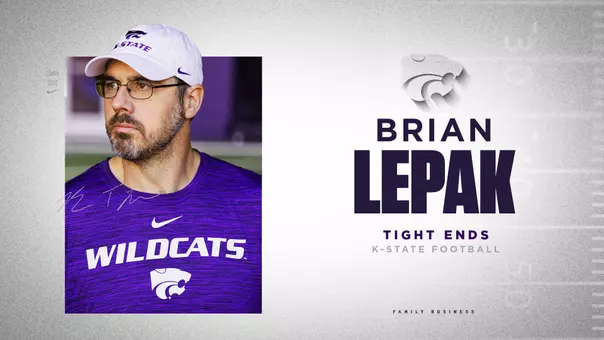
On Thursday, just before noon, Brian Lepak sits in his office in a lavender polo shirt with a dark Powercat upon the chest. To his right of his L-shaped desk is one desktop computer, two laptops, and two cellphones. One cellphone he picks up and shoots a glance at nearly every minute. To Lepak's left is a wall-sized white dry-erase board bearing a list of names and notes sprawled out in green ink.
This is his domain. It has been for a few weeks now. It's up at 6:00 a.m. and leaving the Vanier Family Football Complex at 10:00 p.m. after the final social gathering has wrapped up. It's an unceasing flow of texts and calls and names and numbers and more calls and more texts. This is the game of college football long before the game is played on the football field in September.
Navigating and monitoring the transfer portal is hard work.
"There's a lot of activity, a lot of energy, a lot of excitement," Lepak says. "People are excited and happy to be here and want to win in 2026 and want to do whatever they can to make this successful and help one another. That's the energy. That's the vibe I'm getting."
Lepak, who has had a hand in K-State's offensive success since his arrival in 2021, is in the midst of embarking upon his second stint as K-State tight ends coach — a position he held between 2022 and 2024. He coached the offensive line in 2025.
Lepak rejoins K-State head coach Collin Klein. The two worked together on staff for three seasons, including the 2022 Big 12 Championship campaign.
"The first conversation was about putting together the best staff possible," Lepak says. "For me, I was really thankful that Collin viewed me as somebody to stay on staff and be a part of this. It was a little bit up in the air. What are the best pieces together to give us a full group that can go recruit players, retain players, game plan, coach? Having been in the offensive line room and the tight ends room, it kind of put me into a spot, and it was, "Let's assemble the best cast of characters we can and then we'll figure it out from there." I said, 'Collin, I'm up for whatever we need to do to win at Kansas State. You tell me, and I'll adjust.'"
Now Lepak is back at home.
Upon the formal announcement that he was returning as tight ends coach, Lepak dialed up the current K-State tight ends.
"I texted them all back, and I said, 'Hey boys, saddle up. The Express is rolling again.'"
Lepak spoke with K-State Sports Extra's D. Scott Fritchen about remaining on the K-State football coaching staff, the transfer portal, and the qualities that will best make Collin Klein successful as head coach in Manhattan.

D. SCOTT FRITCHEN: From the time you woke up to now, and on into the afternoon and evening, what's on today's agenda for Brian Lepak?
BRIAN LEPAK: The day started at around 6:00 a.m. and the night will end whenever the last guy is finished with the final social event of the night. We've been working pretty good. Get up early and work until 10:00 p.m. every day. Looking forward to us getting this team together and getting things wrapped up and moving onto the next thing.
I'm still continuing to work on completing the roster for the 2026 season. So, evaluating guys who are options in the portal and assisting wherever it's needed. In reality, it's all hands-on deck, so even if it's not specific to your position, you spot it and help out, whether it's being around a parent or being around a prospect, maybe helping take somebody from one spot to another in a car, or having conversations and talking about perspectives. When you have a staff transition like this, you have a team of people who were here for the last couple years who are staying, and people who are new, and you have to work together on everything. You always have to, but even more so in this situation where you may have to fill in a spot. It's really just being available and helping solve problems.
You may have a connection to a kid because you recruited him out of high school, even though it's not a position that you coached, and he went to a different school and now he's back in the portal. You're trying to establish that, or it's having a conversation with a high school coach to get in touch with a kid. You can see the notes on my wall about guys. That's what you're working on, and then you're relaying information.
FRITCHEN: What's the feeling you get as you walk through the halls of the coaches' offices at Vanier Family Football Complex?
LEPAK: A lot of activity, a lot of energy, a lot of excitement. People are excited and happy to be here and want to win in 2026 and want to do whatever they can to make this successful and help one another. That's the energy. That's the vibe I'm getting.
FRITCHEN: On a scale of 1-10, can you describe the level of craziness over the past week?
LEPAK: It's a 10. We've been dealing with this stuff where everything changes on a three-month basis, but this cycle, in particular, with it being the first real cycle that the revenue sharing stuff is in full effect, and it's a one-time portal window, and it's happening right at the start of the new year, and it's coming up when people are starting their spring semesters. This is definitely the most crazy it's ever been. It is what it is. It's the nature of the thing right now. I don't know if it'll ever change. There may be some resolutions to it. But it's a 10 out of 10.
Then add in a new staff, if you don't have a fully in-place staff, that adds to some of the chaos as well. People are getting to know each other. But it's kind of fun. It's a bonding experience right there. You go through a bunch of stuff together, and you have to get to know each other and learn how to work with each other really, really fast. That makes sometimes things really good because it gets you closer being in the fox hole together much sooner.
FRITCHEN: Describe the camaraderie you've felt among the coaching staff already and the energy and excitement that goes into this undertaking as Collin takes control of a football program so dear to him?
LEPAK: Really good. Obviously, when you have a group of guys coming together who've had experience working with each other, that always helps with that. Then if you've been here and you overlapped with the guys coming back to K-State, or you've been on staff and you're still here, you know, it's been really good seeing guys come in and be able to establish a bond right away. Reality is everybody is a reflection of the head coach. Because of that, there's going to be a lot of similarities and things that you value and your work ethic and what you want to accomplish, and so that makes it really easy to bond.
FRITCHEN: Chris Klieman retires and days later Collin Klein takes over. Describe the month of December and everything that went along with it?
LEPAK: The biggest thing was us just trying to figure out how we work in the transition time when Collin had to go back and coach for Texas A&M and try and make a run in the playoffs. There were lots of phone calls and getting people who were here helping out the transition and us getting up to speed with what's going on with the team and who's who and where's what. Then getting everybody back after the new year and getting the staff filled out to really function, and get everybody in one spot hitting the ground running. So, it's prep work and getting ready for or knowing who's going into the portal.

FRITCHEN: Does it surprise you that so many players across the country have entered the transfer portal?
LEPAK: No, I think that's going to become the norm for everybody. You're going to graduate guys, have some attrition from people who want different opportunities and are looking somewhere else. I think it's going to become the norm, unless something changes with the rules. But that doesn't surprise me at all.
FRITCHEN: Rewind back to early December when Collin Klein was hired as K-State head coach, what thoughts went through your head at that time?
LEPAK: I was excited for Collin, and it was a great choice for K-State. I was sad of Chris Klieman retiring. For me personally, I got here because of Chris Klieman. I got here because of Courtney Messingham and Chris Klieman interviewing me. Chris believed in me and gave me a promotion to coach the tight ends for the first time. He continued to believe in me and helped me in my career and gave me opportunities other people maybe wouldn't have given me. So, it was sad to see Coach Klieman retire. He was a great football coach, a great leader, a great mentor, and man. He accomplished a whole lot in his career. I was sad to see that go and lose that familiarity and leadership, but I know you couldn't write it a better way with the transition to Collin. It's really, really neat. Collin was an excellent player who was on Coach Snyder's staff and was on Coach Klieman's staff, and then he went and got exposed to new stuff and then he came back to lead. That was a really cool deal, and it was exciting.
FRITCHEN: You obviously worked with Collin for three seasons, including K-State's 2022 Big 12 Championship season. When you think of Collin Klein, what are some things that immediately come to mind?
LEPAK: Competitive. Competitive. He has a personality that a lot of people — he's a very polite person, and really nice person, and well-mannered, and a really good leader, but there's a quiet competitiveness that he's always got in there that when you get around him and get to know him and see him in action, it really comes out. Him and Shalin, his wife, they're both really competitive people. There's a reason when you get to know them, "Oh, I see why they met each other when they were in college. They're top-rate competitors." That's the thing I always think of first about Collin, is that he's a competitor, and he's going to win, and he's going to do what is needed to win.
FRITCHEN: That first staff meeting, Collin rounds you all up, what was the message he gave to you?
LEPAK: He said this was going to be the most chaotic 30 days here and it was going to a sprint but the most critical 30 days for the future and the success of this team in 2026. He said, "The plan is to go win." Everybody was going to have to work, there was going to be things that would be up and down and change, and everybody had to be able to adjust to it. It set the tone right away that, "This is what the priority is."
FRITCHEN: You were announced as the K-State tight ends coach this Monday, yet you were already in the building after serving as offensive line coach this last season. Take me back to Monday and what that day was like for Brian Lepak?
LEPAK: It was just another day on the job, and it was time to get it announced. That's what it was. It was getting to work and making sure we had everything done. It was, "Let's go!"
FRITCHEN: When was your first conversation with Collin and how did discussions progress toward this tight ends coach position on the coaching staff?
LEPAK: The first conversation was about putting together the best staff possible. For me, I was really thankful that Collin viewed me as somebody to stay on staff and be a part of this. It was a little bit up in the air. What are the best pieces together to give us a full group that can go recruit players, retain players, game plan, coach? Having been in the offensive line room and the tight ends room, it kind of put me into a spot, and it was, "Let's assemble the best cast of characters we can and then we'll figure it out from there." Coach Schmidt coming in to coach the offensive line is really an awesome addition. I said, "Collin, I'm up for whatever we need to do to win at Kansas State. You tell me and I'll adjust."
FRITCHEN: I understand Collin went from office to office and spoke with each coach. When Collin sat down with you, what was running through your mind at that point?
LEPAK: Well, either he was going to tell me that he loves and appreciates me, but I needed to find another job, or he was going to tell me I was staying. For me, I was at peace with whatever decision. I knew with Collin it wouldn't be anything about a personal relationship. If it wasn't going to work for me to be with him, it wasn't because he didn't care about me, or anything like that. I was at peace with that. I knew that. I know that he is going to do what he knows is best for the program regardless of a personal relationship, and there's no reason to be nervous or upset about anything. Then he just told me that he wanted me to stay on staff.

FRITCHEN: More immediate is the fact that you K-State coaches continue to work around the clock to fill the roster. What tight ends you have returning and how many tight ends would you like to have on roster after the conclusion of the transfer portal?
LEPAK: Our numbers on how many are on roster are always about what's going to be the most important to win. I know as of now, we have three guys returning plus two freshmen who are coming in. We'll have to be flexible and see if we have to get another guy or not. My communication with our tight ends started with a text message. I said, "This is getting announced today." Then it got announced. I texted them all back, and I said, "Hey boys, saddle up. The Express is rolling again." They all responded right away. We had a deal about the Pony Express one year. I've called them all. I haven't gotten to see them in person because they're all at home. I'm excited to be back coaching them.
Garrett Oakley, I've known since we recruited him my first year I was here. We signed Garrett when I was being promoted to tight ends coach, so I've been coaching him since he was a true freshman on campus. Will Anciaux was my first commit when I was officially the tight ends coach. Garrett was already committed and going to sign, and I was a part of making sure they were all good and comfortable with everything. Will was the first one I went to the high school to actively recruit. Then Linkon Cure is a unique deal, just because I recruited him, then switched to offensive line, so I didn't really get the chance to hands-on directly coach him. So, it's fun for me to actually get to do that now. That's how those conversations have gone. It's just a lot of excitement in letting them know I'm looking forward to it, and letting them know about the future here, and the promise for them and their careers. It's a really good group. It's a fun group.
FRITCHEN: Your first tenure as tight ends coach, you had Ben Sinnott, who is now in the NFL, and then you had an All-Big 12 Second Team selection in Garrett Oakley and an All-Big 12 Honorable Mention pick in Will Swanson, marking the first time since 1997 that K-State had a pair of All-Big 12 tight ends in the same season. There was obviously big-time talent in that tight end room. How have they set the standard for what you strive for among your tight ends?
LEPAK: They're really sharp kids, very coachable, they care about the team, and they are athletically talented and make big plays. That really sets the standard that if you're coming here to be a tight end at Kansas State, you know you're going have to buy into all of it, and be about the team, and be able to work with others. It really is a unit that has to function together well. That set the standard that I try to live up to and emulate and learned. I learned so much just from being there. I'm lucky that I got to be around good players right from the start and then to continue to get that in here, I learned from watching those guys as elite competitors.
FRITCHEN: At this stage of things, would you consider the tight end position an area of strength for this 2026 team?
LEPAK: Oh gosh, I'd hope so. I think we're going to have a really good team across the board. I really do. I'm excited to coach them.
FRITCHEN: Collin has a successful offensive background with what he did at K-State and Texas A&M. How does that excite you in knowing you're working with one of the top play-callers in college football?
LEPAK: It makes your job a lot easier. It's exciting and fun to see some of the growth and changes in different directions since he went to Texas A&M. There's still a lot of overlap and similarity. We're being reintroduced to offensively where we kind of branched a little bit, but it's still within the same tree. You can see they fixed perhaps one problem with this system by this solution, and we fixed it with that. Or maybe we used this term, and they used that term. It's fun to see. Over time, you see how people adapt to what pieces they have to make the thing work, and that's a hallmark of anyone who's really good at coordinating calling plays, is they're adapted to the reality of their team. They're not rigid to, "This is what I do, and this is only it." They're able to identify who they have playing for the season and have enough of a core foundation identity that there's consistency throughout it. That's the most exciting thing working with Collin from an offensive ball perspective. He always did a good job with that and has grown even more with that over the past two years at Texas A&M.
FRITCHEN: You arrived at K-State in 2021 as senior offensive quality control coach, then coached tight ends in 2022 through 2024, and then offensive line last season, and now back to tight ends in 2026. Exactly what has this experience at K-State meant to you on a personal and professional level?
LEPAK: My kids are Kansans now. My oldest is nine now, and he was four when we moved here. My daughter, and then I've had two babies born here, so the time here has been awesome for me from a career perspective and clearly an advancement in every category and in learning a lot, but more than anything, this is the longest I've ever been somewhere. This is home for my kids and wife. We live five minutes from campus and people know me at church. This is home. My kids are Kansans. My son was born in Bloomington, Indiana, so he's cheering for IU right now, even though he doesn't really know, but he was there for three months, my daughter was born Norman, and we were there for three years, and then we were in Louisiana for a year, and we picked up a dog, and then we've had two babies here in Kansas.
FRITCHEN: What will be running through your head when you see that same packed Bill Snyder Family Stadium for the 2026 season opener — new team, new coach, same family.
LEPAK: Let's go. It's time to kick the damn thing off and let's go. I mean, I'll be fired up and excited and ready to go compete and put everything on the line for Kansas State.
FRITCHEN: The game of college football has changed, and everything moves very fast these days. In the midst of the grind over these past handful of years at K-State, what have you learned most about yourself?
LEPAK: There's no perfect play, no perfect solution to anything. There's what your will is and your determination to get something done. That kind of fighting spirit and fighting will is more important than probably anything. It makes me think back to when I was a player. There was a quote on the wall at Oklahoma. It was Bud Wilkinson, and he said, "Football in its purest form is a physical fight. Any fight, if you're not willing to, you cannot win." That stuck with me. Over time, I realized what the real wisdom in that quote is, because you have to be in it and want to be in the fight to do this well. That's probably what I've learned the most.
On Thursday, just before noon, Brian Lepak sits in his office in a lavender polo shirt with a dark Powercat upon the chest. To his right of his L-shaped desk is one desktop computer, two laptops, and two cellphones. One cellphone he picks up and shoots a glance at nearly every minute. To Lepak's left is a wall-sized white dry-erase board bearing a list of names and notes sprawled out in green ink.
This is his domain. It has been for a few weeks now. It's up at 6:00 a.m. and leaving the Vanier Family Football Complex at 10:00 p.m. after the final social gathering has wrapped up. It's an unceasing flow of texts and calls and names and numbers and more calls and more texts. This is the game of college football long before the game is played on the football field in September.
Navigating and monitoring the transfer portal is hard work.
"There's a lot of activity, a lot of energy, a lot of excitement," Lepak says. "People are excited and happy to be here and want to win in 2026 and want to do whatever they can to make this successful and help one another. That's the energy. That's the vibe I'm getting."
Lepak, who has had a hand in K-State's offensive success since his arrival in 2021, is in the midst of embarking upon his second stint as K-State tight ends coach — a position he held between 2022 and 2024. He coached the offensive line in 2025.
Lepak rejoins K-State head coach Collin Klein. The two worked together on staff for three seasons, including the 2022 Big 12 Championship campaign.
"The first conversation was about putting together the best staff possible," Lepak says. "For me, I was really thankful that Collin viewed me as somebody to stay on staff and be a part of this. It was a little bit up in the air. What are the best pieces together to give us a full group that can go recruit players, retain players, game plan, coach? Having been in the offensive line room and the tight ends room, it kind of put me into a spot, and it was, "Let's assemble the best cast of characters we can and then we'll figure it out from there." I said, 'Collin, I'm up for whatever we need to do to win at Kansas State. You tell me, and I'll adjust.'"
Now Lepak is back at home.
Upon the formal announcement that he was returning as tight ends coach, Lepak dialed up the current K-State tight ends.
"I texted them all back, and I said, 'Hey boys, saddle up. The Express is rolling again.'"
Lepak spoke with K-State Sports Extra's D. Scott Fritchen about remaining on the K-State football coaching staff, the transfer portal, and the qualities that will best make Collin Klein successful as head coach in Manhattan.
D. SCOTT FRITCHEN: From the time you woke up to now, and on into the afternoon and evening, what's on today's agenda for Brian Lepak?
BRIAN LEPAK: The day started at around 6:00 a.m. and the night will end whenever the last guy is finished with the final social event of the night. We've been working pretty good. Get up early and work until 10:00 p.m. every day. Looking forward to us getting this team together and getting things wrapped up and moving onto the next thing.
I'm still continuing to work on completing the roster for the 2026 season. So, evaluating guys who are options in the portal and assisting wherever it's needed. In reality, it's all hands-on deck, so even if it's not specific to your position, you spot it and help out, whether it's being around a parent or being around a prospect, maybe helping take somebody from one spot to another in a car, or having conversations and talking about perspectives. When you have a staff transition like this, you have a team of people who were here for the last couple years who are staying, and people who are new, and you have to work together on everything. You always have to, but even more so in this situation where you may have to fill in a spot. It's really just being available and helping solve problems.
You may have a connection to a kid because you recruited him out of high school, even though it's not a position that you coached, and he went to a different school and now he's back in the portal. You're trying to establish that, or it's having a conversation with a high school coach to get in touch with a kid. You can see the notes on my wall about guys. That's what you're working on, and then you're relaying information.
FRITCHEN: What's the feeling you get as you walk through the halls of the coaches' offices at Vanier Family Football Complex?
LEPAK: A lot of activity, a lot of energy, a lot of excitement. People are excited and happy to be here and want to win in 2026 and want to do whatever they can to make this successful and help one another. That's the energy. That's the vibe I'm getting.
FRITCHEN: On a scale of 1-10, can you describe the level of craziness over the past week?
LEPAK: It's a 10. We've been dealing with this stuff where everything changes on a three-month basis, but this cycle, in particular, with it being the first real cycle that the revenue sharing stuff is in full effect, and it's a one-time portal window, and it's happening right at the start of the new year, and it's coming up when people are starting their spring semesters. This is definitely the most crazy it's ever been. It is what it is. It's the nature of the thing right now. I don't know if it'll ever change. There may be some resolutions to it. But it's a 10 out of 10.
Then add in a new staff, if you don't have a fully in-place staff, that adds to some of the chaos as well. People are getting to know each other. But it's kind of fun. It's a bonding experience right there. You go through a bunch of stuff together, and you have to get to know each other and learn how to work with each other really, really fast. That makes sometimes things really good because it gets you closer being in the fox hole together much sooner.
FRITCHEN: Describe the camaraderie you've felt among the coaching staff already and the energy and excitement that goes into this undertaking as Collin takes control of a football program so dear to him?
LEPAK: Really good. Obviously, when you have a group of guys coming together who've had experience working with each other, that always helps with that. Then if you've been here and you overlapped with the guys coming back to K-State, or you've been on staff and you're still here, you know, it's been really good seeing guys come in and be able to establish a bond right away. Reality is everybody is a reflection of the head coach. Because of that, there's going to be a lot of similarities and things that you value and your work ethic and what you want to accomplish, and so that makes it really easy to bond.
FRITCHEN: Chris Klieman retires and days later Collin Klein takes over. Describe the month of December and everything that went along with it?
LEPAK: The biggest thing was us just trying to figure out how we work in the transition time when Collin had to go back and coach for Texas A&M and try and make a run in the playoffs. There were lots of phone calls and getting people who were here helping out the transition and us getting up to speed with what's going on with the team and who's who and where's what. Then getting everybody back after the new year and getting the staff filled out to really function, and get everybody in one spot hitting the ground running. So, it's prep work and getting ready for or knowing who's going into the portal.
FRITCHEN: Does it surprise you that so many players across the country have entered the transfer portal?
LEPAK: No, I think that's going to become the norm for everybody. You're going to graduate guys, have some attrition from people who want different opportunities and are looking somewhere else. I think it's going to become the norm, unless something changes with the rules. But that doesn't surprise me at all.
FRITCHEN: Rewind back to early December when Collin Klein was hired as K-State head coach, what thoughts went through your head at that time?
LEPAK: I was excited for Collin, and it was a great choice for K-State. I was sad of Chris Klieman retiring. For me personally, I got here because of Chris Klieman. I got here because of Courtney Messingham and Chris Klieman interviewing me. Chris believed in me and gave me a promotion to coach the tight ends for the first time. He continued to believe in me and helped me in my career and gave me opportunities other people maybe wouldn't have given me. So, it was sad to see Coach Klieman retire. He was a great football coach, a great leader, a great mentor, and man. He accomplished a whole lot in his career. I was sad to see that go and lose that familiarity and leadership, but I know you couldn't write it a better way with the transition to Collin. It's really, really neat. Collin was an excellent player who was on Coach Snyder's staff and was on Coach Klieman's staff, and then he went and got exposed to new stuff and then he came back to lead. That was a really cool deal, and it was exciting.
FRITCHEN: You obviously worked with Collin for three seasons, including K-State's 2022 Big 12 Championship season. When you think of Collin Klein, what are some things that immediately come to mind?
LEPAK: Competitive. Competitive. He has a personality that a lot of people — he's a very polite person, and really nice person, and well-mannered, and a really good leader, but there's a quiet competitiveness that he's always got in there that when you get around him and get to know him and see him in action, it really comes out. Him and Shalin, his wife, they're both really competitive people. There's a reason when you get to know them, "Oh, I see why they met each other when they were in college. They're top-rate competitors." That's the thing I always think of first about Collin, is that he's a competitor, and he's going to win, and he's going to do what is needed to win.
FRITCHEN: That first staff meeting, Collin rounds you all up, what was the message he gave to you?
LEPAK: He said this was going to be the most chaotic 30 days here and it was going to a sprint but the most critical 30 days for the future and the success of this team in 2026. He said, "The plan is to go win." Everybody was going to have to work, there was going to be things that would be up and down and change, and everybody had to be able to adjust to it. It set the tone right away that, "This is what the priority is."
FRITCHEN: You were announced as the K-State tight ends coach this Monday, yet you were already in the building after serving as offensive line coach this last season. Take me back to Monday and what that day was like for Brian Lepak?
LEPAK: It was just another day on the job, and it was time to get it announced. That's what it was. It was getting to work and making sure we had everything done. It was, "Let's go!"
FRITCHEN: When was your first conversation with Collin and how did discussions progress toward this tight ends coach position on the coaching staff?
LEPAK: The first conversation was about putting together the best staff possible. For me, I was really thankful that Collin viewed me as somebody to stay on staff and be a part of this. It was a little bit up in the air. What are the best pieces together to give us a full group that can go recruit players, retain players, game plan, coach? Having been in the offensive line room and the tight ends room, it kind of put me into a spot, and it was, "Let's assemble the best cast of characters we can and then we'll figure it out from there." Coach Schmidt coming in to coach the offensive line is really an awesome addition. I said, "Collin, I'm up for whatever we need to do to win at Kansas State. You tell me and I'll adjust."
FRITCHEN: I understand Collin went from office to office and spoke with each coach. When Collin sat down with you, what was running through your mind at that point?
LEPAK: Well, either he was going to tell me that he loves and appreciates me, but I needed to find another job, or he was going to tell me I was staying. For me, I was at peace with whatever decision. I knew with Collin it wouldn't be anything about a personal relationship. If it wasn't going to work for me to be with him, it wasn't because he didn't care about me, or anything like that. I was at peace with that. I knew that. I know that he is going to do what he knows is best for the program regardless of a personal relationship, and there's no reason to be nervous or upset about anything. Then he just told me that he wanted me to stay on staff.
FRITCHEN: More immediate is the fact that you K-State coaches continue to work around the clock to fill the roster. What tight ends you have returning and how many tight ends would you like to have on roster after the conclusion of the transfer portal?
LEPAK: Our numbers on how many are on roster are always about what's going to be the most important to win. I know as of now, we have three guys returning plus two freshmen who are coming in. We'll have to be flexible and see if we have to get another guy or not. My communication with our tight ends started with a text message. I said, "This is getting announced today." Then it got announced. I texted them all back, and I said, "Hey boys, saddle up. The Express is rolling again." They all responded right away. We had a deal about the Pony Express one year. I've called them all. I haven't gotten to see them in person because they're all at home. I'm excited to be back coaching them.
Garrett Oakley, I've known since we recruited him my first year I was here. We signed Garrett when I was being promoted to tight ends coach, so I've been coaching him since he was a true freshman on campus. Will Anciaux was my first commit when I was officially the tight ends coach. Garrett was already committed and going to sign, and I was a part of making sure they were all good and comfortable with everything. Will was the first one I went to the high school to actively recruit. Then Linkon Cure is a unique deal, just because I recruited him, then switched to offensive line, so I didn't really get the chance to hands-on directly coach him. So, it's fun for me to actually get to do that now. That's how those conversations have gone. It's just a lot of excitement in letting them know I'm looking forward to it, and letting them know about the future here, and the promise for them and their careers. It's a really good group. It's a fun group.
FRITCHEN: Your first tenure as tight ends coach, you had Ben Sinnott, who is now in the NFL, and then you had an All-Big 12 Second Team selection in Garrett Oakley and an All-Big 12 Honorable Mention pick in Will Swanson, marking the first time since 1997 that K-State had a pair of All-Big 12 tight ends in the same season. There was obviously big-time talent in that tight end room. How have they set the standard for what you strive for among your tight ends?
LEPAK: They're really sharp kids, very coachable, they care about the team, and they are athletically talented and make big plays. That really sets the standard that if you're coming here to be a tight end at Kansas State, you know you're going have to buy into all of it, and be about the team, and be able to work with others. It really is a unit that has to function together well. That set the standard that I try to live up to and emulate and learned. I learned so much just from being there. I'm lucky that I got to be around good players right from the start and then to continue to get that in here, I learned from watching those guys as elite competitors.
FRITCHEN: At this stage of things, would you consider the tight end position an area of strength for this 2026 team?
LEPAK: Oh gosh, I'd hope so. I think we're going to have a really good team across the board. I really do. I'm excited to coach them.
FRITCHEN: Collin has a successful offensive background with what he did at K-State and Texas A&M. How does that excite you in knowing you're working with one of the top play-callers in college football?
LEPAK: It makes your job a lot easier. It's exciting and fun to see some of the growth and changes in different directions since he went to Texas A&M. There's still a lot of overlap and similarity. We're being reintroduced to offensively where we kind of branched a little bit, but it's still within the same tree. You can see they fixed perhaps one problem with this system by this solution, and we fixed it with that. Or maybe we used this term, and they used that term. It's fun to see. Over time, you see how people adapt to what pieces they have to make the thing work, and that's a hallmark of anyone who's really good at coordinating calling plays, is they're adapted to the reality of their team. They're not rigid to, "This is what I do, and this is only it." They're able to identify who they have playing for the season and have enough of a core foundation identity that there's consistency throughout it. That's the most exciting thing working with Collin from an offensive ball perspective. He always did a good job with that and has grown even more with that over the past two years at Texas A&M.
FRITCHEN: You arrived at K-State in 2021 as senior offensive quality control coach, then coached tight ends in 2022 through 2024, and then offensive line last season, and now back to tight ends in 2026. Exactly what has this experience at K-State meant to you on a personal and professional level?
LEPAK: My kids are Kansans now. My oldest is nine now, and he was four when we moved here. My daughter, and then I've had two babies born here, so the time here has been awesome for me from a career perspective and clearly an advancement in every category and in learning a lot, but more than anything, this is the longest I've ever been somewhere. This is home for my kids and wife. We live five minutes from campus and people know me at church. This is home. My kids are Kansans. My son was born in Bloomington, Indiana, so he's cheering for IU right now, even though he doesn't really know, but he was there for three months, my daughter was born Norman, and we were there for three years, and then we were in Louisiana for a year, and we picked up a dog, and then we've had two babies here in Kansas.
FRITCHEN: What will be running through your head when you see that same packed Bill Snyder Family Stadium for the 2026 season opener — new team, new coach, same family.
LEPAK: Let's go. It's time to kick the damn thing off and let's go. I mean, I'll be fired up and excited and ready to go compete and put everything on the line for Kansas State.
FRITCHEN: The game of college football has changed, and everything moves very fast these days. In the midst of the grind over these past handful of years at K-State, what have you learned most about yourself?
LEPAK: There's no perfect play, no perfect solution to anything. There's what your will is and your determination to get something done. That kind of fighting spirit and fighting will is more important than probably anything. It makes me think back to when I was a player. There was a quote on the wall at Oklahoma. It was Bud Wilkinson, and he said, "Football in its purest form is a physical fight. Any fight, if you're not willing to, you cannot win." That stuck with me. Over time, I realized what the real wisdom in that quote is, because you have to be in it and want to be in the fight to do this well. That's probably what I've learned the most.
Players Mentioned

TE
/ Football
TE
/ Football
TE
/ Football
TE
/ FootballK-State Women's Basketball | Postgame Highlights at Houston
Thursday, January 08
K-State Men's Basketball | Postgame Press Conference at Arizona
Thursday, January 08
K-State Women's Basketball | Game Replay vs West Virginia - January 3, 2026
Monday, January 05
K-State Women's Basketball | Coach Mittie Press Conference vs West Virginia
Sunday, January 04